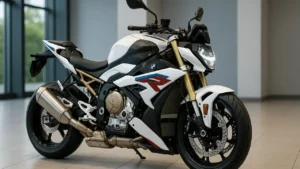
The Yamaha XSR 155 may sell itself as a nostalgic throwback with its round headlamp, flat seat, and heritage-inspired design — but underneath that retro skin lies a modern, liquid-cooled, high-compression engine that has already proven itself on the R15 and MT-15 platforms.
This post breaks down the engine behaviour, performance characteristics, refinement, and real-world riding dynamics of the Yamaha XSR 155 specifically in Indian conditions — traffic-ridden cities, patchy highways, and everyday commuting.
Unlike generic “specs + summary” reviews floating on the web, this analysis explains how the engine actually feels, how it behaves at different RPMs, what the bike does on broken roads, and how it compares with its siblings.
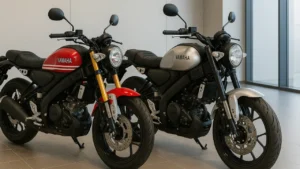
1. Engine Architecture: The Heart of the XSR 155
At its core, the Yamaha XSR 155 uses the tried-and-tested 155cc liquid-cooled SOHC engine with Variable Valve Actuation (VVA). This is the same engine that powers the R15 V4 and MT-15 — widely regarded as the best performance-oriented 150cc unit in India.
What VVA means in the real world
VVA uses two different cam profiles:
- Cam 1 (Low RPM): Enhances torque and fuel efficiency
- Cam 2 (High RPM): Boosts power above 7,400 rpm
This allows the XSR to behave calmly in the city and aggressively on open roads.
Engine Behaviour Table (RPM vs Feel)
| RPM Range | Engine Behaviour (XSR 155) |
|---|---|
| 0–4,000 rpm | Smooth, commuter-friendly, no strain |
| 4,000–6,000 rpm | Torque builds gradually; great for overtakes |
| 6,000–7,500 rpm | Engine wakes up; VVA activates |
| 7,500–10,000 rpm | Strong pull, sporty acceleration |
| 10,000+ rpm | Track-like feel; similar to R15 behaviour |
This dual-nature tuning is what separates the XSR from traditional retro bikes like the RE Hunter or TVS Ronin, which run out of breath after 6–7k rpm.
2. Real-World Acceleration & Performance Behaviour
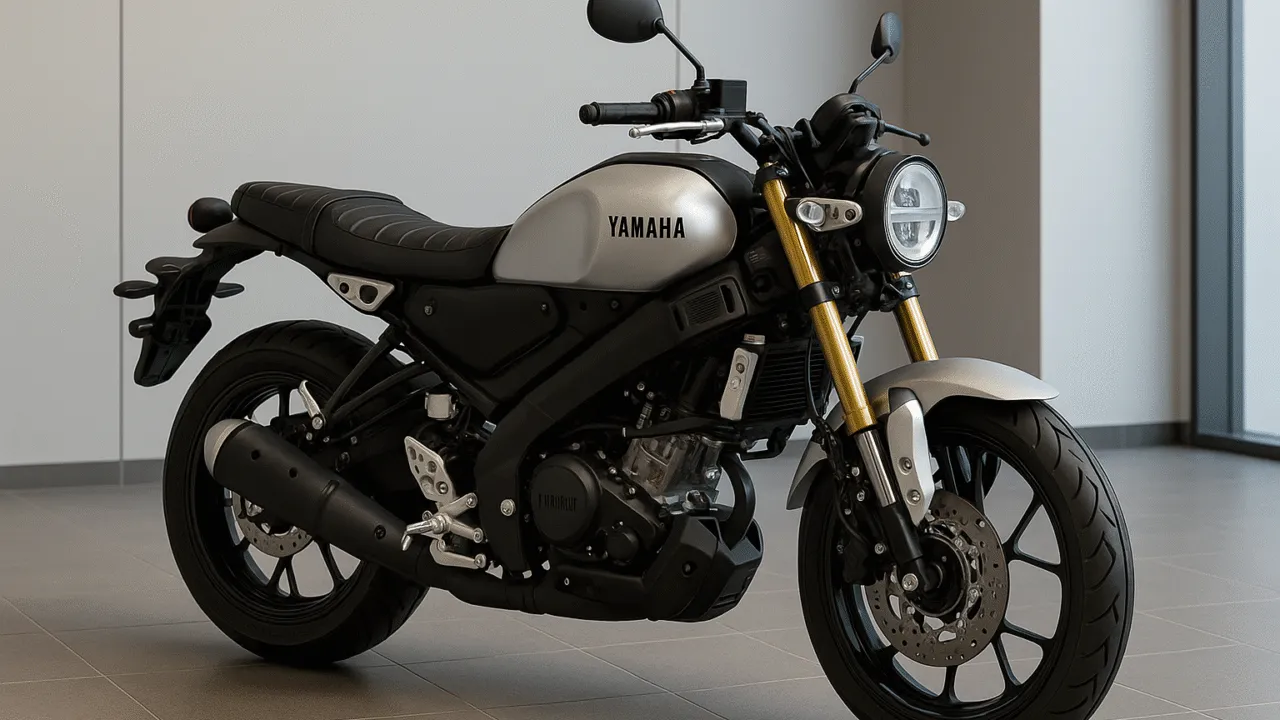
The XSR is not designed to be a dragster.
Its tuning favours progressive, linear acceleration rather than sudden bursts.
But thanks to high compression, liquid cooling, and VVA, the XSR is one of the fastest motorcycles in its class.
Real-World Performance Table
| Metric | Yamaha XSR 155 |
|---|---|
| 0–40 km/h | Quick and smooth |
| 0–60 km/h | ~5.5 seconds |
| 0–100 km/h | ~16 seconds |
| Top Speed (True) | 125–130 km/h |
| Top Speed (Speedo Indicated) | 135–138 km/h |
Acceleration feels more natural than the MT-15 and less aggressive than the R15. The XSR sits perfectly between both siblings.
Where the XSR excels
• Smooth roll-on acceleration
• Effortless overtakes in 3rd and 4th gear
• High-rpm stability without vibrations
• Engine remains calm even when pushed continuously
Where it’s slightly behind
• Not as sharp as R15 during hard acceleration
• MT-15 still feels punchier in lower gears
But for daily riding, the XSR offers the best-balanced tuning in Yamaha’s 155cc lineup.
3. City Riding Dynamics: The XSR’s Natural Habitat
The XSR 155 shines brightest in the city.
Its upright ergonomics, neutral steering, and predictable throttle response make the bike incredibly easy to ride through narrow streets and traffic.
Strengths in city riding
- Light clutch operation
- Shorter wheelbase makes it nimble
- Narrow tank helps in filtering
- Engine stays refined even in heavy traffic
- Minimal heat around the legs due to liquid cooling
Unlike the R15, which demands committed riding posture, the XSR lets you sit up straight and relaxed.
City Comfort Table
| Parameter | XSR 155 | MT-15 | R15 V4 |
|---|---|---|---|
| Traffic comfort | Excellent | Good | Low |
| Low-speed smoothness | Excellent | Very good | Moderate |
| Turning radius | Better | Similar | Poor |
| Riding posture | Very relaxed | Slightly leaned | Aggressive |
| Heat management | Very good | Very good | Good |
For daily commutes, the XSR is the best choice among Yamaha’s 155cc machines.
4. Highway Performance: Stability Above Expectations
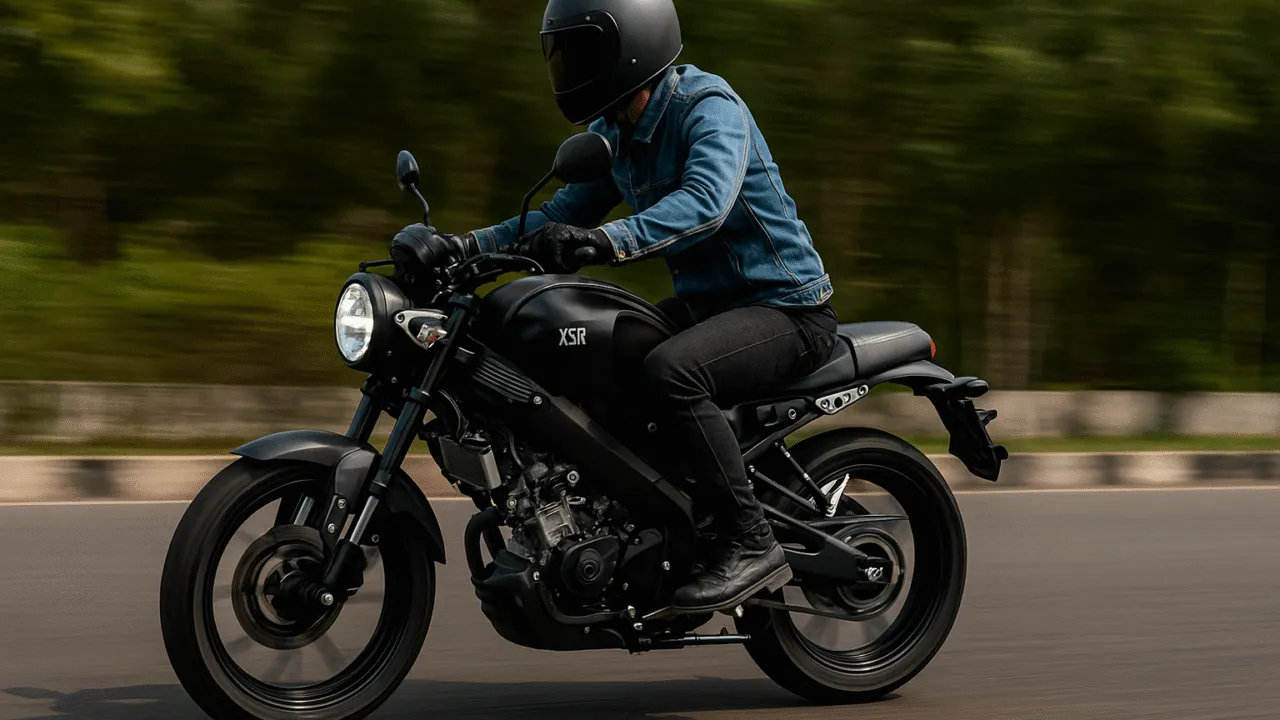
Even though the XSR is marketed as a retro roadster, its chassis roots come from a proven high-speed platform.
The Deltabox frame ensures:
- high-speed stability
- rigidity during cornering
- predictable steering
Highway Riding Characteristics
At 80 km/h:
Effortless, no vibrations, engine feels relaxed.
At 100 km/h:
Still composed, minimal handlebar buzz.
At 120 km/h:
Rider needs to tuck slightly; windblast becomes noticeable.
Above 125 km/h:
Only achievable on open stretches, but surprisingly stable.
Highway Skill Table
| Aspect | XSR 155 |
|---|---|
| Stability | Very stable |
| Windblast | Noticeable after 100 km/h |
| Overtaking | Strong mid-range helps |
| Cruising sweet spot | 80–95 km/h |
| Long rides | Comfortable posture |
If you want a retro bike that can genuinely cruise at 100+ km/h without vibrating, the XSR is one of the very few choices under ₹2 lakh.
5. Gearbox & Clutch: Among the Best in Segment
The 6-speed gearbox is incredibly refined.
Every shift feels light, precise, and confidence-inspiring.
Real-World Gearbox Impressions
- Gears slot effortlessly
- Slipper clutch reduces fatigue in traffic
- No false neutrals even during aggressive riding
- Ratios are well-spaced for both city and highway
This gearbox is what makes the XSR feel premium — even compared to more expensive retro bikes.
6. Refinement & Heat Management: One of Its Biggest Strengths
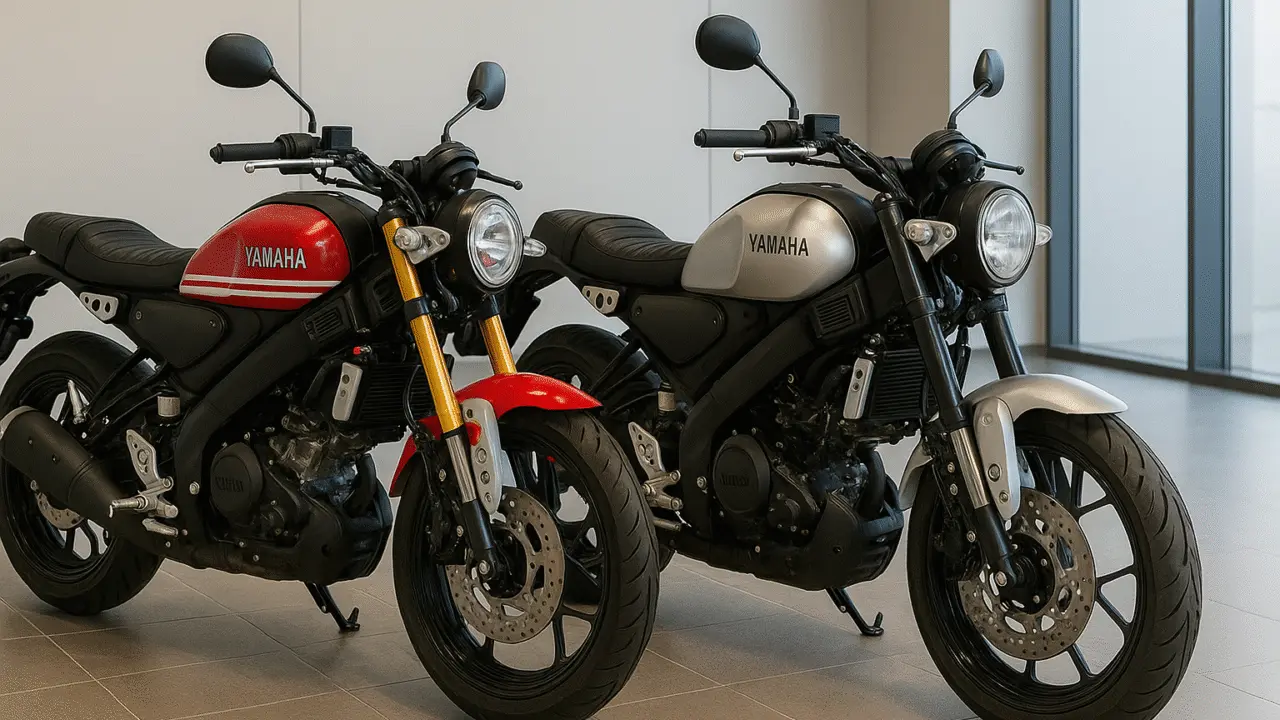
Unlike air-cooled retro bikes that get hot and lose performance, the XSR stays cool and stable throughout.
Heat Management Rating
| Condition | Behaviour |
|---|---|
| Slow traffic | Barely warms up |
| Summer riding | Fan kicks in, but heat is controlled |
| Long highway runs | Stays smooth without overheating |
| Hard acceleration | No power loss |
The engine refinement is noticeably superior to commuter-based retro bikes like Hunter 350 or Ronin, especially at higher RPMs.
7. Cornering & Handling: Retro Look, Sport DNA
Despite its vintage styling, the XSR 155 handles like a proper Yamaha performance bike.
The rigid frame and well-tuned suspension allow you to lean confidently into corners.
Characteristics during cornering
- Neutral steering makes it beginner-friendly
- Deltabox frame keeps the bike planted mid-corner
- Rear monoshock absorbs bumps without upsetting balance
- Predictable front end inspires rider confidence
It’s not as sharp as the R15 but far more agile than most retro motorcycles.
8. Suspension & Ride Quality: Balanced for Indian Roads
Suspension is tuned for comfort first, but with enough stiffness for sporty riding.
Ride Quality Table
| Surface Type | Behaviour |
|---|---|
| City potholes | Absorbs most bumps comfortably |
| Broken rural roads | Slightly firm but controlled |
| Highways | Stable and planted |
| Corners | Just the right amount of firmness |
Yamaha has struck a good balance — soft enough for comfort, stiff enough for control.
9. Braking & Stability Confidence
Braking is predictable and linear, not overly sharp — ideal for new riders.
Braking Behaviour
- Front disc has strong bite
- Rear is progressive
- Single-channel ABS works well
- High-speed stability remains intact during hard braking
Not as aggressive as R15’s braking setup, but perfect for mixed city-highway riders.
10. Performance Comparison: XSR 155 vs MT-15 vs R15 V4
This comparison focuses not on specs but real-world behaviour.
Performance Behaviour Table
| Aspect | XSR 155 | MT-15 | R15 V4 |
|---|---|---|---|
| City comfort | Best | Very good | Poor |
| Highway composure | Very good | Good | Excellent |
| Top speed | High | High | Highest |
| Handling agility | Very good | Excellent | Excellent |
| Touring ability | Very good | Moderate | Good |
| Rider fatigue | Very low | Medium | High |
| VVA feel | Noticeable | Strong | Very strong |
The XSR sits right in the sweet spot — practical yet sporty.
FAQs — Yamaha XSR 155 Engine & Performance
Q1. What is the true top speed of the Yamaha XSR 155?
It delivers around 125–130 km/h in real-world riding conditions.
Q2. How does the XSR 155 feel in daily commuting?
It is extremely smooth, refined, and comfortable thanks to the upright ergonomics and smooth torque delivery.
Q3. Does the XSR 155 overheat in traffic?
No. The liquid-cooled engine and fan keep it cool even in summer traffic.
Q4. What mileage can riders expect?
City mileage is around 45 km/l, while highway riding returns 48–50 km/l.
Q5. Is it better than the MT-15 in performance?
The MT-15 is slightly sharper, but the XSR 155 offers a more comfortable and balanced ride with similar engine performance.
Q6. Can the XSR 155 be used for touring?
Yes. It is surprisingly good for 200–400 km rides thanks to its comfortable seating and smooth engine.