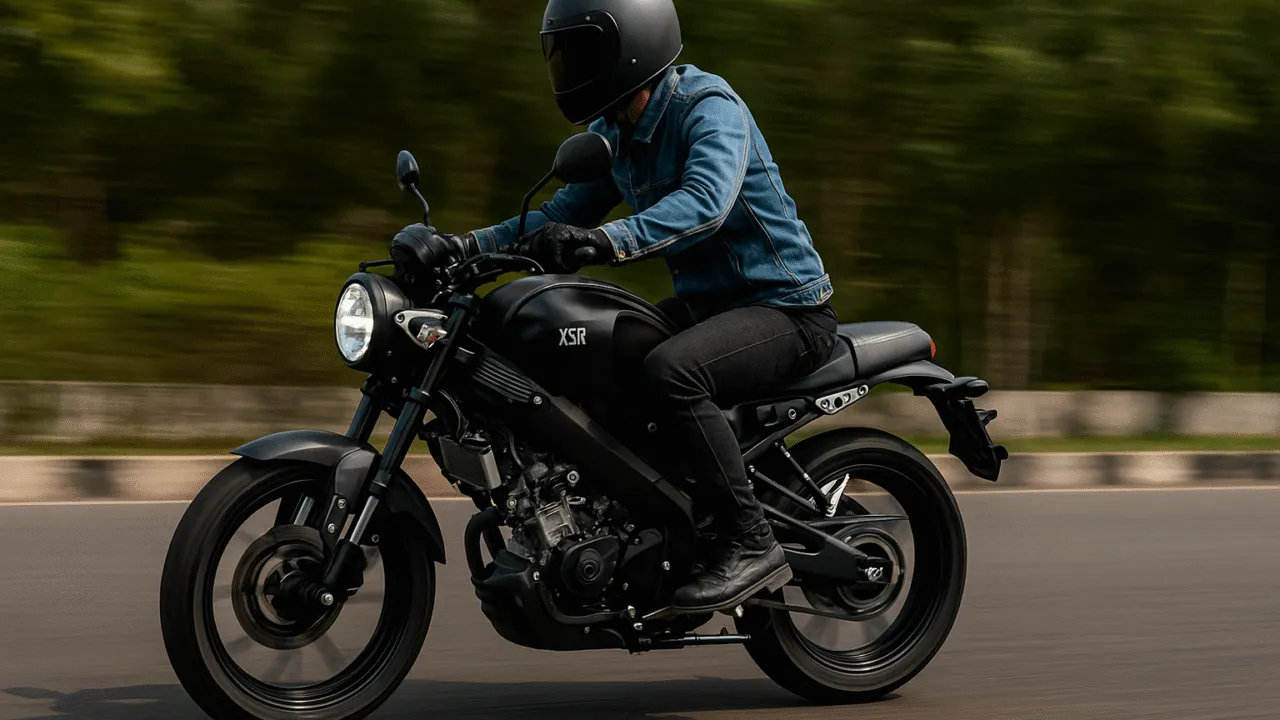
Retro motorcycles and high fuel efficiency rarely go together — but the Yamaha XSR 155 is an exception. Beneath its old-school, lifestyle-focused styling lies Yamaha’s highly efficient 155cc liquid-cooled VVA engine, the same powerplant trusted by the R15 and MT-15.
The XSR 155, despite being a premium neo-retro machine with a performance-oriented engine, delivers mileage figures that rival many standard 125cc and 150cc commuters. Combined with Yamaha’s bulletproof reliability and low running cost, the XSR 155 stands out as one of the most economical premium motorcycles in India.
This post breaks down the XSR’s real-world mileage, fuel efficiency patterns, service cost, long-term user experience, issues, and value-for-money analysis.
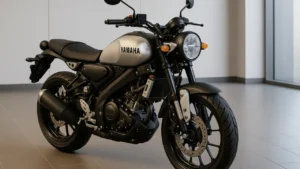
1. Yamaha XSR 155 Mileage Overview: Claimed vs Real-World Efficiency
Yamaha’s official claimed mileage for the XSR 155 (based on R15/MT-15 platform averages) ranges around 48–50 km/l. However, actual numbers vary significantly depending on riding style, traffic conditions, fuel quality, and maintenance.
Here is a clean comparison:
Claimed vs Tested Mileage Table
| Riding Condition | Claimed Mileage | Real-World Mileage (India) |
|---|---|---|
| City (Heavy Traffic) | 48–50 km/l | 38–42 km/l |
| City (Mixed Traffic) | 48–50 km/l | 42–46 km/l |
| Highway (80 km/h cruising) | 50 km/l | 48–52 km/l |
| Highway (Speeds above 90 km/h) | 50 km/l | 40–44 km/l |
| Overall Combined Mileage | — | 43–47 km/l |
What these numbers mean
The XSR 155 performs best between 55–80 km/h, where the VVA system optimizes power and fuel consumption. Too much aggressive throttle use or speeds above 90 km/h significantly reduce mileage.
Yet even in the worst conditions, the XSR 155 rarely drops below 38 km/l, which is impressive for a premium 155cc liquid-cooled motorcycle.
2. How Yamaha’s VVA Helps Mileage: Technology Breakdown
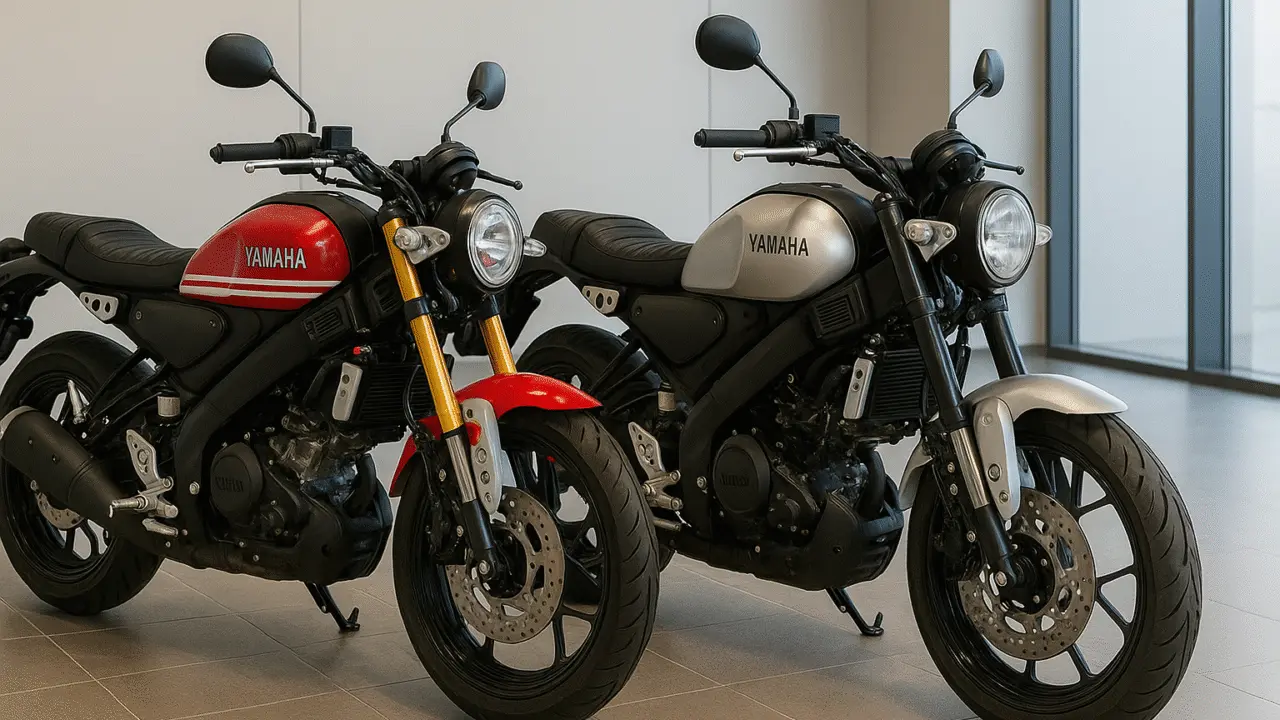
The XSR 155 uses Yamaha’s Variable Valve Actuation (VVA) system, which plays a major role in fuel efficiency.
How VVA Improves Efficiency
- At low RPMs, the engine uses a milder cam profile
- Fuel consumption stays minimal in city commuting
- At high RPMs, a more aggressive cam profile activates
- This gives access to performance without burning extra fuel unnecessarily
- The transition point at around 7,400 rpm keeps power consistent
Real-World Impact
You get:
- Efficient city rides
- Strong mid-range torque
- Smooth cruising on highways
- Lower fuel wastage during slow traffic
Few retro bikes in India have technology even close to this level of efficiency optimization.
3. Fuel Efficiency Factors: What Improves or Reduces XSR Mileage
Several real-world factors affect mileage. Here is a clear breakdown you can use:
What Increases Mileage
| Factor | Mileage Benefit |
|---|---|
| Riding between 50–70 km/h | +4–7 km/l |
| Using good fuel (XP95 recommended) | +2–4 km/l |
| Smooth throttle inputs | +3–5 km/l |
| Timely air-filter cleaning | +3 km/l |
| Maintaining correct tyre pressure | +2–3 km/l |
What Reduces Mileage
| Habit / Condition | Mileage Drop |
|---|---|
| Riding above 90 km/h | –6 to –10 km/l |
| Aggressive acceleration | –4 to –7 km/l |
| Riding in bumper-to-bumper traffic | –3 to –5 km/l |
| Not warming engine in winter | –2 to –3 km/l |
| Neglected chain lubrication | –2 to –4 km/l |
This explains why some riders get 52 km/l on highways while others drop to 38 km/l in chaotic city zones.
4. XSR 155 Fuel Tank Capacity, Range & Practicality
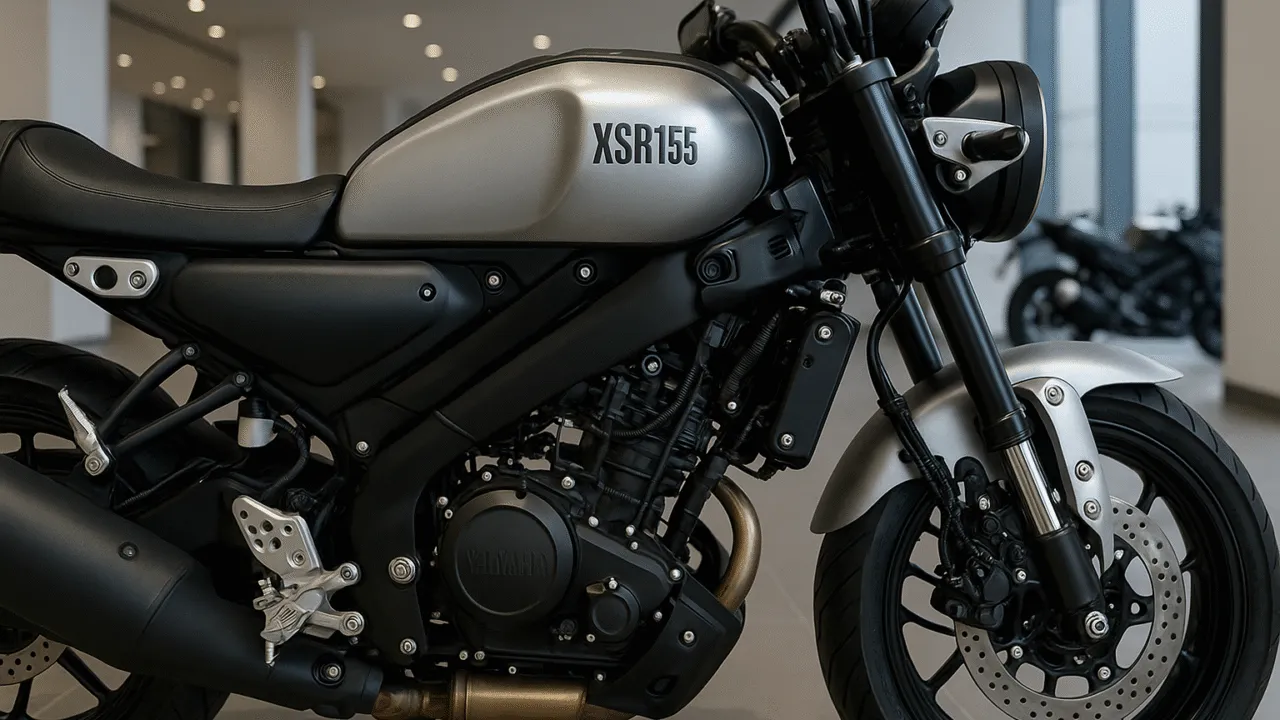
Here is the complete breakdown of its tank and range:
Tank & Range Table
| Specification | Value |
|---|---|
| Fuel Tank Capacity | 10 litres |
| Usable Fuel | Approx 9.2 litres |
| City Range | 350–380 km |
| Highway Range | 450–500 km |
| Combined Riding Range | 400+ km |
Despite having a smaller tank than many retro bikes, the XSR’s efficiency makes it very practical for long-distance rides.
5. XSR 155 Mileage Comparison vs Rivals
Here is a purely mileage-based comparison with its closest competitors:
Mileage Comparison Table
| Model | Engine | Real-World Mileage | Fuel Tank |
|---|---|---|---|
| Yamaha XSR 155 | 155cc, VVA | 42–48 km/l | 10L |
| Yamaha MT-15 | 155cc, VVA | 40–46 km/l | 10L |
| Yamaha R15 V4 | 155cc, VVA | 38–44 km/l | 11L |
| TVS Ronin 225 | 225cc | 33–38 km/l | 14L |
| Bajaj Pulsar N160 | 164cc | 38–44 km/l | 14L |
| Royal Enfield Hunter 350 | 349cc | 33–37 km/l | 13L |
The XSR 155 is the most fuel-efficient retro-looking motorcycle currently in the Indian market.
6. Real-World Ownership Experience: How the XSR Performs Daily
Owners globally and in Southeast Asia report extremely positive long-term performance. Since the bike is already a big success in Thailand, Vietnam, Indonesia, and Malaysia, there is plenty of real-world data available.
Key Findings From Owners
- No engine reliability issues even at 50,000+ km
- Chain needs lubrication every 500–700 km
- No panel vibrations — stable build quality
- Mileage remains consistent over years
- Minimal drop in efficiency even after long-term use
- Suspension is comfortable for daily commuting
- Tyres last 15,000–18,000 km depending on riding style
Indian owners can expect similar reliability because the engine is identical to the R15/MT-15.
7. Service Cost, Maintenance & Parts Cost — Complete Breakdown
Average Yearly Ownership Cost Table
| Service Type | Approx Cost |
|---|---|
| First free service | ₹0–400 |
| Paid service (every 3000–4000 km) | ₹900–1,300 |
| Engine oil (Yamalube) | ₹420–850 |
| Oil filter | ₹80–120 |
| Air filter | ₹180–250 |
| Chain lube & cleaning | ₹150–200 |
| Brake pad replacement | ₹450–650 front |
Annual Ownership Cost Estimate
For riders covering 8,000–10,000 km/year:
₹5,000 to ₹7,000/year, which is extremely economical for a premium bike.
8. Long-Term Reliability: Global Feedback & Indian Expectations
Since the XSR 155 is sold internationally, we have long-term data.
Long-term reliability highlights
- Engines routinely last 80,000+ km without overhaul
- ECU and VVA system are extremely reliable
- Minimal overheating even in hot climates
- Plastics and paint do not fade easily
- Bearings and sprockets wear slower than rivals
- No abnormal vibration issues even after long-term use
This makes the XSR one of the best-engineered retro bikes in India.
9. Value-for-Money Verdict: Does XSR 155 Justify Its Premium?
Considering the following:
- Mileage better than most 160cc–200cc bikes
- Performance close to sporty 150cc machines
- Retro looks
- Premium build
- Global reliability record
- Low yearly maintenance
The XSR 155 delivers excellent value for money for riders who want:
- A premium daily commuter
- A retro bike without retro inefficiency
- Long-term reliability
- Modern engine tech in a classic body
- Weekend touring capability
- Better pricing than big retro bikes like Ronin/CB350
It’s not the cheapest 155cc, but it’s certainly one of the most balanced and practical premium motorcycles in India.
FAQs — Yamaha XSR 155 Mileage & Ownership Experience
Q1. What is the real-world mileage of the Yamaha XSR 155?
Between 42–48 km/l depending on traffic and riding style.
Q2. Does VVA improve mileage?
Yes, VVA optimizes power delivery and reduces fuel waste, giving better efficiency.
Q3. Is XSR 155 expensive to maintain?
No. Annual maintenance costs average around ₹5,000–7,000, similar to the MT-15.
Q4. How far can the XSR 155 go on a full tank?
Up to 450–500 km on highways and around 350–380 km in cities.
Q5. Is the XSR 155 reliable for long-term use?
Yes. The engine is globally proven and extremely durable with regular servicing.
Q6. Does aggressive riding reduce mileage?
Yes. Riding above 90 km/h or pushing the engine hard reduces mileage by 6–10 km/l.
Q7. Is the XSR 155 suitable for daily city commute?
Absolutely. Upright ergonomics and excellent mileage make it very commuter-friendly.