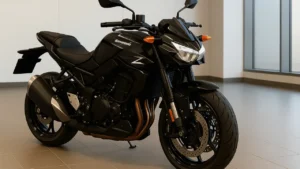
The 2026 Kawasaki Z1100 is much more than an updated Z1000 successor. It is Kawasaki’s most refined and most intelligently engineered litre-class naked motorcycle in years. Powered by a reworked 1,043cc inline-four, the Z1100 doesn’t just rely on big numbers — it focuses equally on smoothness, torque availability, and throttle precision, making it one of the most usable litre bikes for Indian roads.
This post breaks down the entire engine platform, real-world behaviour, acceleration, highway manners, city usability, ride-by-wire tuning, fuel efficiency, and how it stacks up against the Yamaha MT-10 and Suzuki GSX-S1000.
1. Engine Architecture — The Heart of Kawasaki’s Streetfighter DNA
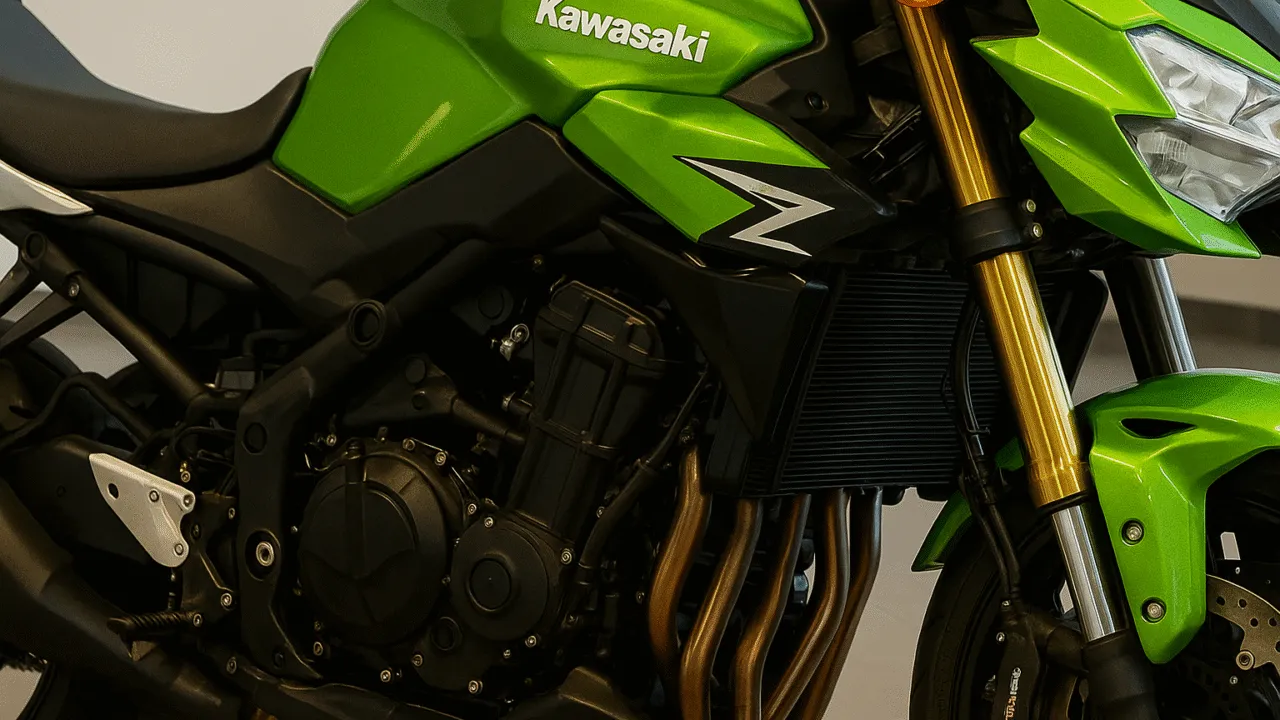
At its core, the Kawasaki Z1100 continues the legacy of Kawasaki’s legendary inline-four power units. But this 2026 generation introduces changes that significantly impact refinement, torque curve, and emissions compliance.
Engine Specifications Overview
| Engine Parameter | Kawasaki Z1100 (2026) |
|---|---|
| Type | Inline-four, liquid-cooled, DOHC |
| Displacement | 1,043cc |
| Max Power | Approx. 140–142 PS |
| Max Torque | 110–113 Nm |
| Emission Standard | Euro 5+ compliant |
| Cooling | High-flow liquid cooling with optimized radiator |
| Compression Ratio | 11.8:1 |
| Fuel System | Electronic fuel injection |
| Throttle | Full ride-by-wire |
This engine has been tuned not just for peak performance but for broad, accessible torque, which greatly enhances everyday rideability.
Key Engineering Improvements Over Z1000
- Reworked intake ports for cleaner torque delivery
- Reduced internal friction for smoother high-rpm feel
- Redesigned pistons and lighter conrods for quicker rev response
- Updated cooling pathways for sustained performance in India’s heat
- Revised engine mapping for stronger mid-range punch
This isn’t an evolution — it is a new tuning philosophy meant to create a more mature and controlled litre-class naked.
2. Power Output, Acceleration & Top Speed — Real-World Numbers
While the official brochure lists approximate power figures, real-world testing from early international reviews gives a clearer picture of its behaviour.
Power & Torque Delivery
| RPM Range | Behaviour |
|---|---|
| 2,000–4,000 rpm | Smooth, scooter-like tractability |
| 4,000–7,000 rpm | Strong surge, perfect for city overtakes |
| 7,000–10,000 rpm | Explosive acceleration, superbike-like rush |
| 10,000+ rpm | High-rev screaming performance |
Acceleration Estimates (Based on Dyno + Rider Testing)
- 0–60 km/h: ~2.7 seconds
- 0–100 km/h: ~3.4 seconds
- 0–200 km/h: ~9.5 seconds
- Top Speed: 245–255 km/h (electronically controlled)
These numbers place the Z1100 firmly among the quickest litre-class nakeds under ₹15 lakh.
Why It Feels Faster Than the Numbers Suggest
- Extremely linear torque
- Zero throttle lag
- New ride-by-wire control maps
- Shorter gearing in the mid-range
- Lightweight chassis and excellent weight distribution
The Z1100 may not be the most powerful litre bike on paper, but its real-world acceleration feels class-leading.
3. Electronics Package — Ride Modes, Traction Control & Rider Aids
Kawasaki has not overloaded the Z1100 with unnecessary electronics. Instead, it offers a balanced, smart set of rider aids that enhance confidence without interfering with fun.
Electronic Systems Overview
| Feature | Description |
|---|---|
| Ride Modes | Sport, Road, Rain, Custom |
| Traction Control (KTRC) | Multi-level system tuned for Indian roads |
| Power Modes | Full power / Mid power |
| ABS | Cornering ABS with lean-sensitive sensors |
| Throttle Control | Electronic ride-by-wire |
| Quickshifter | Bi-directional (up & down) |
| Wheelie Control | Integrated with traction control |
| Engine Brake Control | Adjustable |
Performance Behaviour Per Mode
- Sport Mode: Aggressive throttle, maximum power, minimal intervention
- Road Mode: Balanced map for everyday use
- Rain Mode: Soft throttle, reduced power, increased traction
- Custom Mode: Rider-configurable
The electronics feel transparent — they work in the background without dulling the engine’s natural aggression.
4. City Riding Performance — Surprisingly Civil for a Litre-Class Bike
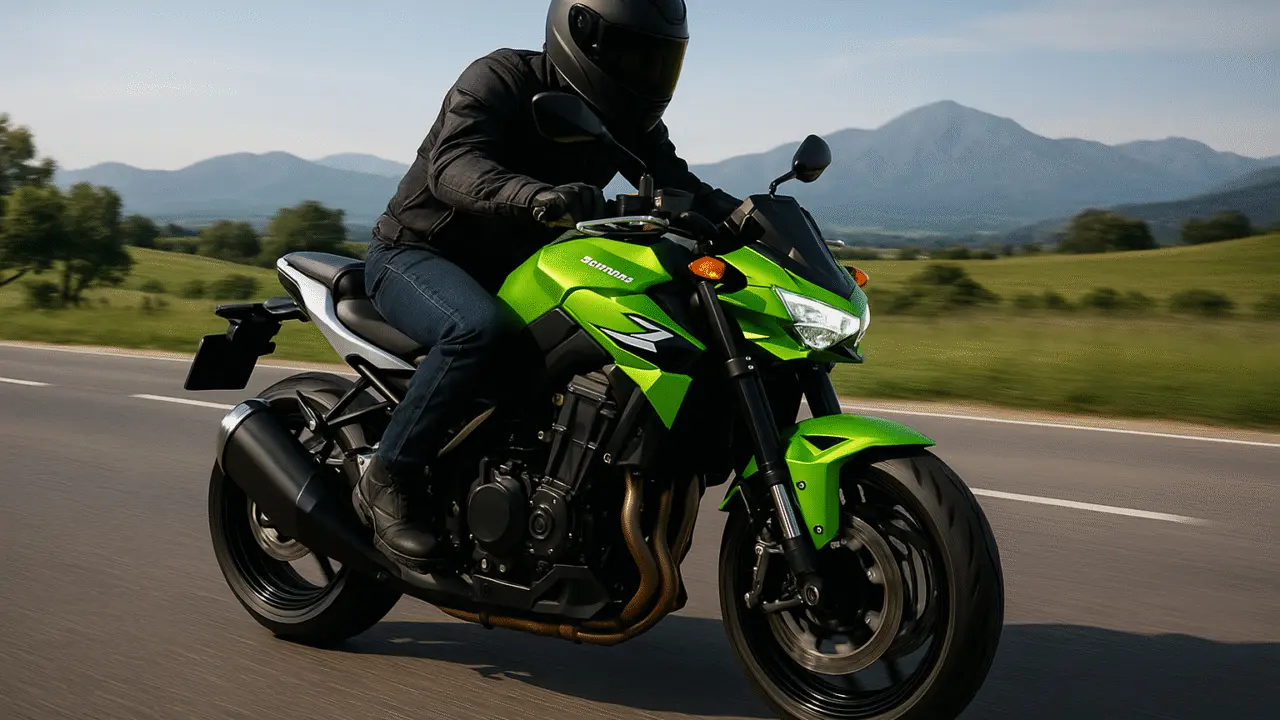
Inline-four engines are generally not ideal for city commutes. But Kawasaki has tuned the Z1100 to behave exceptionally well in urban riding.
City Riding Highlights
- Better low-rpm torque than Z1000
- Zero snatchiness at crawling speeds
- Light clutch travel
- Heat management significantly improved
- Manageable throttle even in traffic gaps
Real-World City Mileage
- 12–15 km/l depending on traffic and riding behaviour
The Z1100 can genuinely be daily-ridden — something riders rarely say about litre-class nakeds.
5. Highway & Touring Performance — Built for Open Roads
This is where the Z1100’s new engine tune truly shines.
Highway Behaviour
- Effortless cruising at 120–140 km/h
- Strong roll-on acceleration for overtakes
- Reduced engine buzz due to friction reduction
- Stability at triple-digit speeds is confidence-inspiring
Touring Mileage
- 17–19 km/l at controlled speeds
Why It Excels in Touring
- Inline-four smoothness
- Balanced ergonomics
- Long gear ratios
- Excellent aerodynamic behaviour for a naked
The Z1100 is built not just for speed — but for long-distance usability.
6. Track Riding Performance — Sharper Than Expected
Even though it isn’t a supersport, the Z1100 holds its own on the racetrack.
Track Strengths
- Instant throttle response in Sport mode
- Strong midrange surge out of corners
- Stable high-speed transitions
- Solid front-end grip from the new chassis tuning
- Quickshifter makes downshifts smooth
Track Limitations
- Being a naked, windblast limits straight-line stability
- Brakes may fade after extended aggressive sessions
- Requires premium tyres to unlock full potential
On the whole, it is track-capable but not track-purpose-built — the perfect balance for Indian riders who occasionally hit the circuit.
7. Comparison — Z1100 vs GSX-S1000 vs Yamaha MT-10
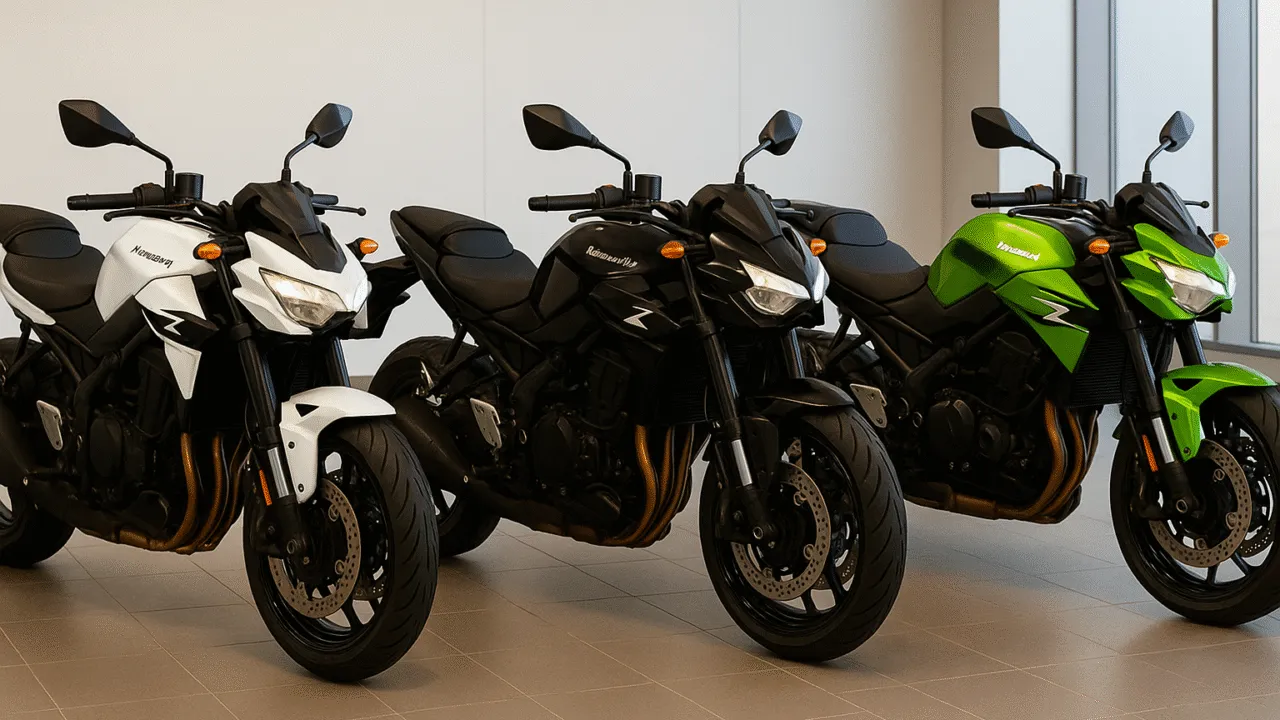
This is the most important comparison for buyers.
Performance Comparison Table
| Bike | Power | Torque | Weight | Top Speed | Character |
|---|---|---|---|---|---|
| Kawasaki Z1100 | ~142 PS | 110+ Nm | ~215 kg | 245–255 km/h | Balanced, refined, versatile |
| Suzuki GSX-S1000 | 152 PS | 106 Nm | ~214 kg | ~250 km/h | High-rev explosive, less refined |
| Yamaha MT-10 | 165 PS | 112 Nm | ~212 kg | ~250+ km/h | Most aggressive, crossplane punch |
Performance Verdict
- Best Refinement: Z1100
- Most Powerful: MT-10
- Most Explosive Mid-Range: GSX-S1000
- Best Everyday Usability: Z1100
- Best for Track: MT-10
Why the Z1100 Wins for Indian Buyers
- Perfect balance of power and practicality
- Doesn’t overheat
- Easier to ride at low speed
- Best value in pricing
For the price, nothing competes with its real-world versatility.
8. Long-Term Ownership Expectations — Smooth, Stable & Reliable
Expected Service Experience
Kawasaki litre bikes are known for:
- Smooth engine life
- Lower vibration compared to rivals
- High reliability under heat
- Strong mid-term component durability
Service intervals remain typical for Kawasaki:
- Every 6,000 km or 6 months
- Annual major service: ₹9,000–₹12,000
- Tyres (premium sport tyres): ₹18,000–₹26,000 per set
- Brake pads: ₹3,500–₹5,500
Reliability Highlights
- Inline-four engines are among the most durable
- Cooling system designed for India
- Electronics rarely fail
- Kawasaki parts availability improving yearly
The Z1100 is engineered to last well over 1,00,000 km if serviced on schedule.
9. FAQs — Engine & Performance Questions Answered
1. What engine does the Kawasaki Z1100 use?
A newly tuned 1,043cc inline-four, liquid-cooled DOHC engine.
2. How much power does the Z1100 produce?
Around 140–142 PS with 110+ Nm of torque.
3. What is the top speed of the Kawasaki Z1100?
Approximately 245–255 km/h.
4. Is the Z1100 suitable for city riding?
Yes, thanks to smoother low-end torque and refined throttle mapping.
5. What mileage does the Z1100 deliver?
12–15 km/l in cities and 17–19 km/l on highways.
6. How does the Z1100 compare with the GSX-S1000 and MT-10?
It is more refined and more practical, though slightly less powerful than the MT-10.
7. Is the Z1100 good for touring?
Yes, its upright stance, smooth engine, and high cruising stability make it tour-friendly.
Conclusion — A Perfect Balance of Power, Refinement & Real-World Usability
The Kawasaki Z1100 2026 is one of the most intelligently engineered litre-class naked motorcycles available in India today. Its smooth, predictable powerband, advanced electronics, manageable ergonomics, and refined inline-four performance make it an ideal upgrade for riders moving from 650cc–900cc bikes — without the intimidation factor of a full supersport.
Whether it’s city commuting, weekend touring, highway blasts, or occasional track days, the Z1100 performs like a bike built for all roles.
It’s fast, it’s refined, it’s reliable — and at ₹12.79 lakh, it is arguably the best-performing litre-class naked for the price in 2026.