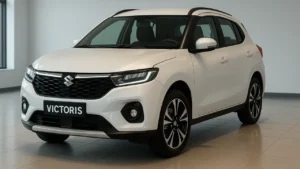
The Renault Duster 2025 is set to bring the brand’s signature ruggedness back to India, but this time with a sophisticated powertrain lineup — including turbo-petrol and hybrid engine options. Designed to meet Bharat Stage VII norms and India’s evolving fuel-efficiency standards, the new Duster’s drivetrain range promises a balance of performance, economy, and refinement rarely seen in this segment.
Let’s dive into all the engine specs, power outputs, transmission options, and mileage expectations, along with how the new Duster stacks up against rivals like the Skoda Kushaq 1.5 TSI and Hyundai Creta 1.5 Turbo.

1. Overview — The Next-Gen Powertrain Strategy
Renault has re-engineered the Duster for its global CMF-B platform, capable of accommodating mild-hybrid, strong-hybrid, and turbocharged petrol engines.
Unlike the older 1.5L naturally aspirated and 1.5L diesel models, the new generation focuses on electrified turbo-petrol powertrains, delivering higher efficiency and lower emissions.
Engine Lineup Highlights
- 1.0L Turbo Petrol — Entry-level, efficient, compact motor.
- 1.3L Turbo Petrol — Shared with Nissan and Mercedes-Benz, tuned for higher output.
- 1.6L Strong Hybrid — Co-developed with Dacia for superior fuel economy and city driving.
The new Duster will continue Renault’s tradition of offering robust drivability, with added refinement and modern transmission choices.
2. Detailed Engine Specifications
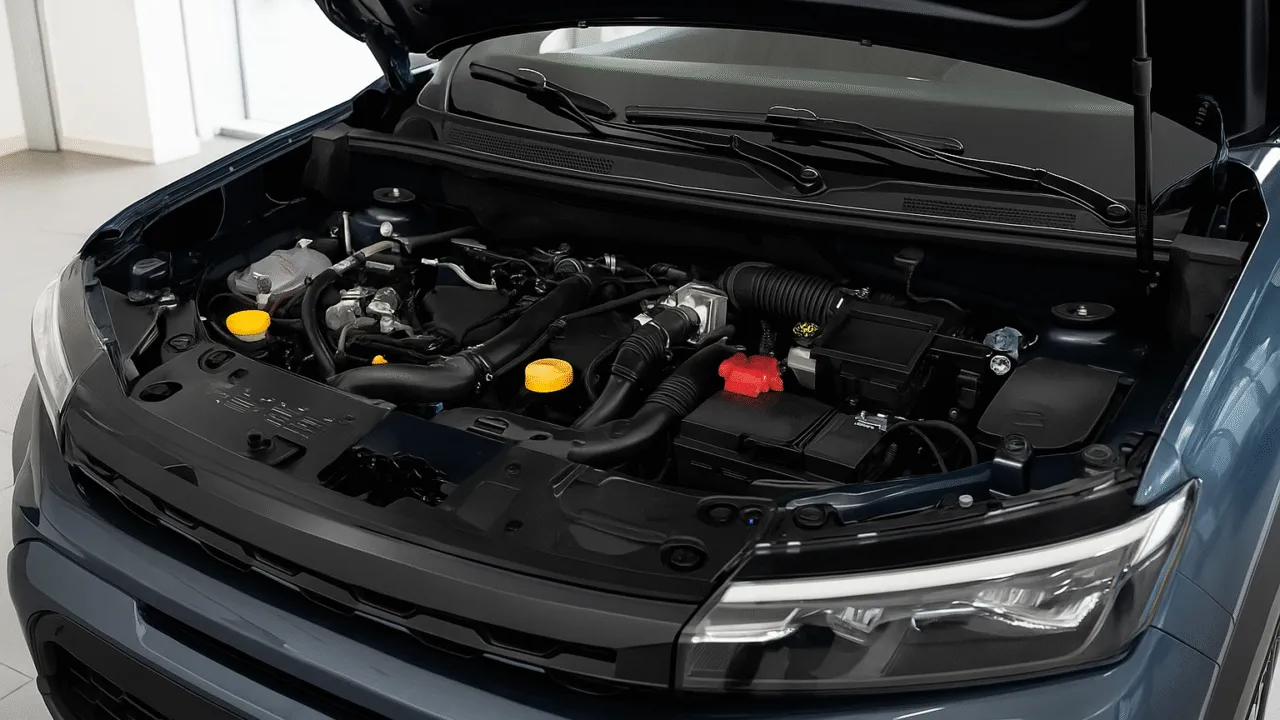
| Engine Type | Displacement (cc) | Power Output (PS) | Torque (Nm) | Transmission Options | Drivetrain |
|---|---|---|---|---|---|
| 1.0L Turbo Petrol (TCE 100) | 999 | 115 | 160 | 6-Speed Manual / CVT | FWD |
| 1.3L Turbo Petrol (TCE 130) | 1332 | 156 | 250 | 6-Speed MT / 7-Speed DCT | FWD / AWD (Top) |
| 1.6L Strong Hybrid (E-Tech) | 1598 | 140 (combined) | 205 | e-CVT (Hybrid system) | FWD |
Engine Summary
- The 1.3L Turbo Petrol will be the performance-oriented choice.
- The 1.6L Strong Hybrid will focus on efficiency and smoothness, perfect for urban users.
- The 1.0L Turbo will serve as the affordable base option for fleet and budget buyers.
Hybrid Advantage: The 1.6L unit uses two electric motors, regenerative braking, and an electric-only start mode — ideal for stop-go Indian traffic.
3. Transmission Options and Drive Configurations
Renault is expected to offer multiple transmission pairings depending on the variant and market.
| Engine Variant | Gearbox Options | Drivetrain Layout |
|---|---|---|
| 1.0L Turbo | 6-Speed Manual / CVT | FWD |
| 1.3L Turbo | 6-Speed Manual / 7-Speed DCT | FWD / AWD |
| 1.6L Hybrid | e-CVT (Automatic) | FWD |
AWD (All-Wheel Drive) will remain exclusive to the 1.3L turbo-petrol variant, continuing the Duster’s reputation as a true go-anywhere SUV. Expect selectable terrain modes and improved traction management as part of the AWD package.
4. Performance Figures and Driving Dynamics

The new Duster’s powertrain lineup ensures strong numbers across the board — whether it’s the city-friendly hybrid or the highway-ready turbo variants.
| Parameter | 1.0L Turbo Petrol | 1.3L Turbo Petrol | 1.6L Strong Hybrid |
|---|---|---|---|
| Power (PS) | 115 | 156 | 140 (combined) |
| Torque (Nm) | 160 | 250 | 205 |
| 0–100 km/h (sec) | ~11.5 | ~9.5 | ~10.5 |
| Top Speed (km/h) | 180 | 195 | 175 |
| Fuel Economy (km/l) | 16–17 | 17–19 | 21–23 |
Driving Experience
- Turbo punch: The 1.3L engine delivers linear power with smooth DCT shifts, ensuring effortless overtakes.
- Hybrid silence: The 1.6L hybrid starts and crawls on electric mode, offering whisper-quiet city operation.
- Manual control: The 6-speed manual brings back the Duster’s engaging, mechanical feel.
Verdict: The hybrid offers efficiency, the turbo delivers thrills — together, they make the Duster lineup well-rounded for all types of drivers.
5. Fuel Efficiency and Real-World Mileage
Renault’s hybrid tech delivers a strong upgrade in real-world mileage.
Here’s how each powertrain is expected to perform in Indian driving conditions:
| Variant | City Mileage (km/l) | Highway Mileage (km/l) | Combined Range (km) |
|---|---|---|---|
| 1.0L Turbo Petrol | 14–15 | 17–18 | ~750 |
| 1.3L Turbo Petrol | 13–14 | 17–19 | ~700 |
| 1.6L Strong Hybrid | 20–22 | 23–24 | ~950 |
Insight:
- The strong hybrid will easily outperform both turbo engines in city conditions.
- Regenerative braking and start-stop functions reduce idle fuel loss by 10–12%.
- The hybrid system battery charges automatically while braking or cruising — no plug-in required.
6. Ride, Handling, and Suspension Tuning
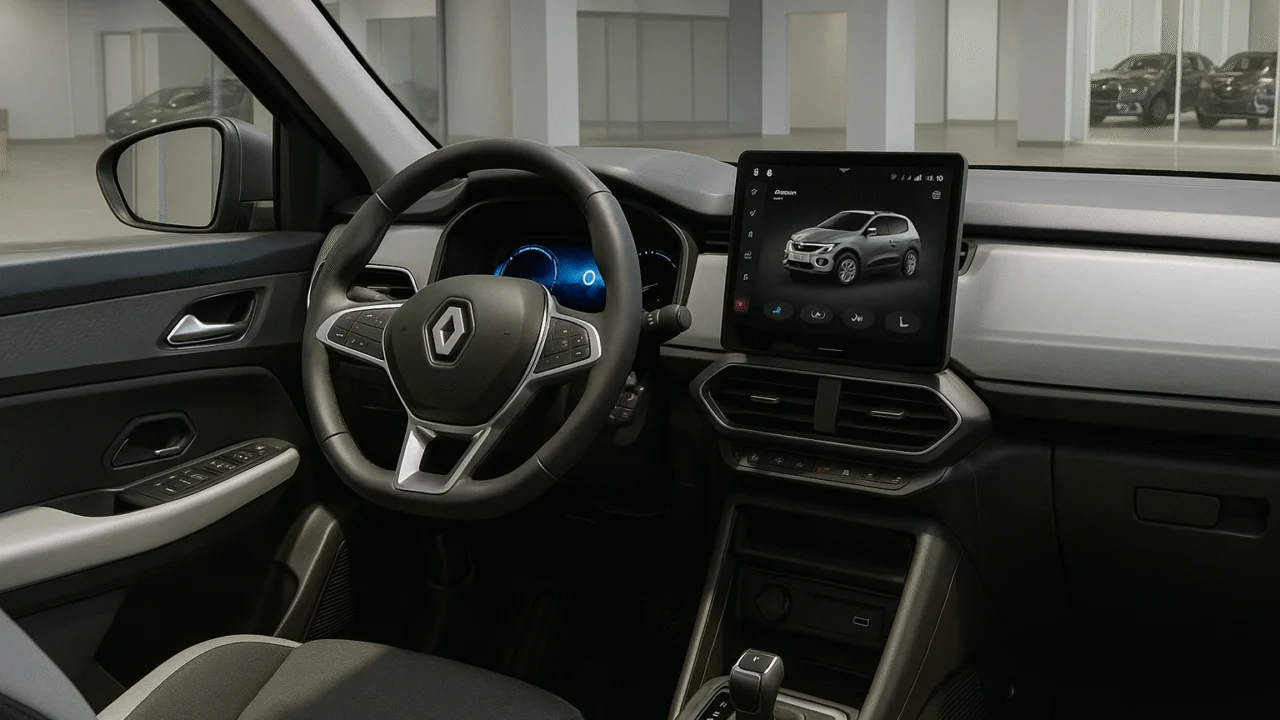
The Duster’s DNA has always been about robust suspension and confident dynamics, and Renault is not changing that formula — only improving it.
Key Improvements
- CMF-B platform stiffness improves high-speed stability.
- New suspension geometry reduces roll without sacrificing comfort.
- Hydraulic rebound stops enhance bad-road absorption.
- AWD variant gets recalibrated damping for off-road conditions.
| Ride Characteristic | Improvement (vs old Duster) |
|---|---|
| Ride Comfort | +15% smoother over potholes |
| Steering Feel | Tighter electric power assist |
| Cornering Stability | Enhanced with wider track |
| Noise, Vibration, Harshness | -20% NVH compared to 2019 Duster |
The result is an SUV that feels planted on highways yet supple on rough surfaces — a balance the Duster has always been praised for.
7. Engine Comparison: Duster 1.3 Turbo vs Rivals
To understand where the new Duster stands, here’s how its 1.3L turbo-petrol compares against segment leaders like the Kushaq 1.5 TSI and Creta 1.5 Turbo:
| Model | Engine | Power (PS) | Torque (Nm) | Transmission | Claimed Mileage (km/l) |
|---|---|---|---|---|---|
| Renault Duster 1.3L Turbo | 1.3L TCe | 156 | 250 | 6MT / 7DCT | 17–19 |
| Skoda Kushaq 1.5 TSI | 1.5L TSI | 150 | 250 | 6MT / 7DSG | 18–20 |
| Hyundai Creta 1.5 Turbo | 1.5L Turbo GDi | 160 | 253 | 6MT / 7DCT | 18–19 |
| Kia Seltos 1.5 Turbo | 1.5L Turbo | 160 | 253 | 7DCT | 18–19 |
Observation:
The Duster sits right in the middle of this performance band. It may not out-muscle the Creta Turbo on paper, but its lighter chassis and AWD grip will give it an edge in real-world traction and handling.
8. Maintenance, Durability, and Long-Term Reliability
Renault’s alliance with Nissan ensures shared component sourcing, reducing part costs and ensuring long-term reliability.
| Category | Expected Interval / Cost |
|---|---|
| Engine Oil & Filter | Every 10,000 km / ₹2,000 |
| Air & Fuel Filter | Every 20,000 km / ₹1,200 |
| Hybrid Battery Health Check | Every 30,000 km / ₹1,000 |
| Transmission Oil (DCT/CVT) | Every 60,000 km / ₹4,000 |
| Average Annual Maintenance Cost | ₹10,000–₹12,000 |
The hybrid variant will have minimal additional cost, as its electric components are largely sealed and maintenance-free for up to 8 years / 1.6 lakh km.
9. Powertrain Verdict — Balanced, Modern, and Indian-Ready
- For daily commuters: The 1.6L Hybrid is the perfect blend of economy and comfort.
- For enthusiasts: The 1.3L Turbo + DCT + AWD combo will deliver the most engaging drive.
- For budget buyers: The 1.0L Turbo keeps the Duster accessible without compromising features.
The Duster 2025’s new lineup shows Renault’s intent — to re-enter India with a technologically advanced yet durable SUV, suited to both highways and backroads.
FAQs
Q1. What engines will power the Renault Duster 2025 in India?
Three options — 1.0L turbo-petrol, 1.3L turbo-petrol, and 1.6L strong hybrid.
Q2. What is the expected mileage?
Mileage is expected between 16–19 km/l for turbo variants and up to 23 km/l for the hybrid.
Q3. Does the new Duster have AWD?
Yes, available exclusively on the 1.3L turbo-petrol top variant.
Q4. What are the transmission choices?
6-speed manual, 7-speed DCT, and e-CVT (for hybrid).
Q5. How does it compare to the Creta or Kushaq in performance?
It matches them in power but outshines in u003cstrongu003eride quality, hybrid efficiency, and AWD tractionu003c/strongu003e.