The Toyota RAV4 Hybrid 2026 might wear a city-friendly design, but underneath, it’s engineered with the soul of an adventure SUV. Toyota has made sure that the RAV4 isn’t just about comfort and fuel economy — it’s also about capability, balance, and control when the tarmac ends.
With its advanced Electronic All-Wheel Drive (e-AWD) system, robust TNGA-K platform, and versatile terrain response setup, the RAV4 Hybrid 2026 bridges the gap between an efficient urban commuter and a light off-roader.
In this post, we’ll break down how its hybrid AWD system works, how capable it is on trails and rough roads, and what real-world buyers can expect when they take it on weekend adventures.
1. Overview — The Purpose of RAV4 Hybrid’s Off-Road DNA
While Toyota positions the RAV4 Hybrid as a global crossover, its capability roots trace back to the company’s SUV icons like the Land Cruiser and Fortuner.
The 2026 RAV4 Hybrid brings a more sophisticated take on versatility — not a hardcore rock-crawler, but a system tuned for India’s real-world terrains: broken roads, light mud, gravel, and inclines.
It uses Toyota’s “e-AWD” (Electronic All-Wheel Drive) — a hybrid-specific AWD system that enhances grip without compromising efficiency.
2. e-AWD System — How It Works
The RAV4 Hybrid replaces the traditional mechanical driveshaft with a dedicated rear electric motor. This motor powers the rear wheels only when additional traction is needed, controlled by the vehicle’s intelligent hybrid computer.
e-AWD Technical Breakdown
| Feature | Description |
|---|---|
| Type | Electronic All-Wheel Drive (e-AWD) |
| Rear Motor Output | ~55 hp (approx. 40 kW) |
| Torque Distribution | Front 100% → Rear up to 20–80% (adaptive) |
| Control System | Predictive torque distribution based on traction input |
| Drive Modes | Normal, Eco, Sport, Trail |
| Lock Function | Simulated center diff lock using torque control |
| Traction Assist | Works with Vehicle Stability Control and ABS for precision |
This means that unlike traditional AWD systems, there’s no mechanical linkage between the front and rear axles — reducing weight and improving efficiency while still giving all-weather control.
Toyota’s software can predict loss of traction even before it happens, based on steering angle, throttle input, and wheel slip — applying power to the rear instantly when needed.
3. Drive Modes & Terrain Response
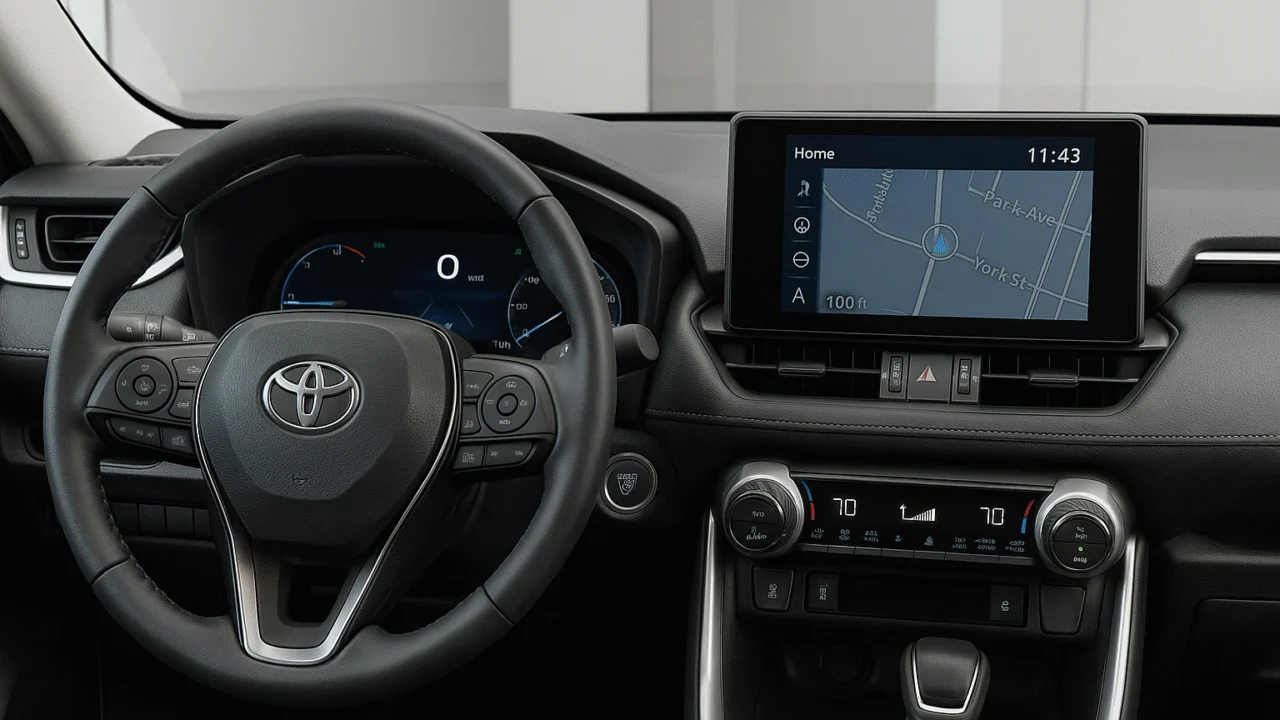
The 2026 RAV4 Hybrid offers a set of intelligent driving modes designed for various terrains and driver preferences.
Drive & Terrain Modes
| Mode | Ideal Use | Effect |
|---|---|---|
| Eco Mode | Urban & highway | Optimizes throttle and hybrid response for max efficiency |
| Normal Mode | Daily mixed use | Balances performance and comfort |
| Sport Mode | Spirited driving | Sharper throttle response and steering weight |
| Trail Mode | Gravel, mud, or inclines | Maximizes rear torque, applies brake-based traction to slipping wheels |
The Trail Mode is particularly useful for Indian conditions like steep hill tracks, sand patches, or loose surfaces during monsoon. It automatically redistributes power between wheels and manages braking torque individually.
4. Suspension Setup & Ride Comfort
Toyota has tuned the RAV4 Hybrid’s suspension for a fine balance between handling precision and ride comfort.
Suspension & Ride Dynamics
| Component | Specification |
|---|---|
| Front Suspension | MacPherson Strut with Coil Springs |
| Rear Suspension | Double Wishbone / Multi-Link Setup |
| Dampers | Frequency-dependent for comfort and control |
| Chassis Platform | TNGA-K (Toyota New Global Architecture) |
| Steering System | Electric Power-Assisted (EPS) |
The multi-link rear suspension setup gives the RAV4 Hybrid excellent stability on undulating roads, while the platform’s rigidity ensures minimal body roll during off-road detours.
In comparison to ladder-frame SUVs, the RAV4 feels lighter and more agile — perfect for users who drive mostly in cities but want confidence during weekend trips.
5. Ground Clearance, Angles, and Capability Metrics
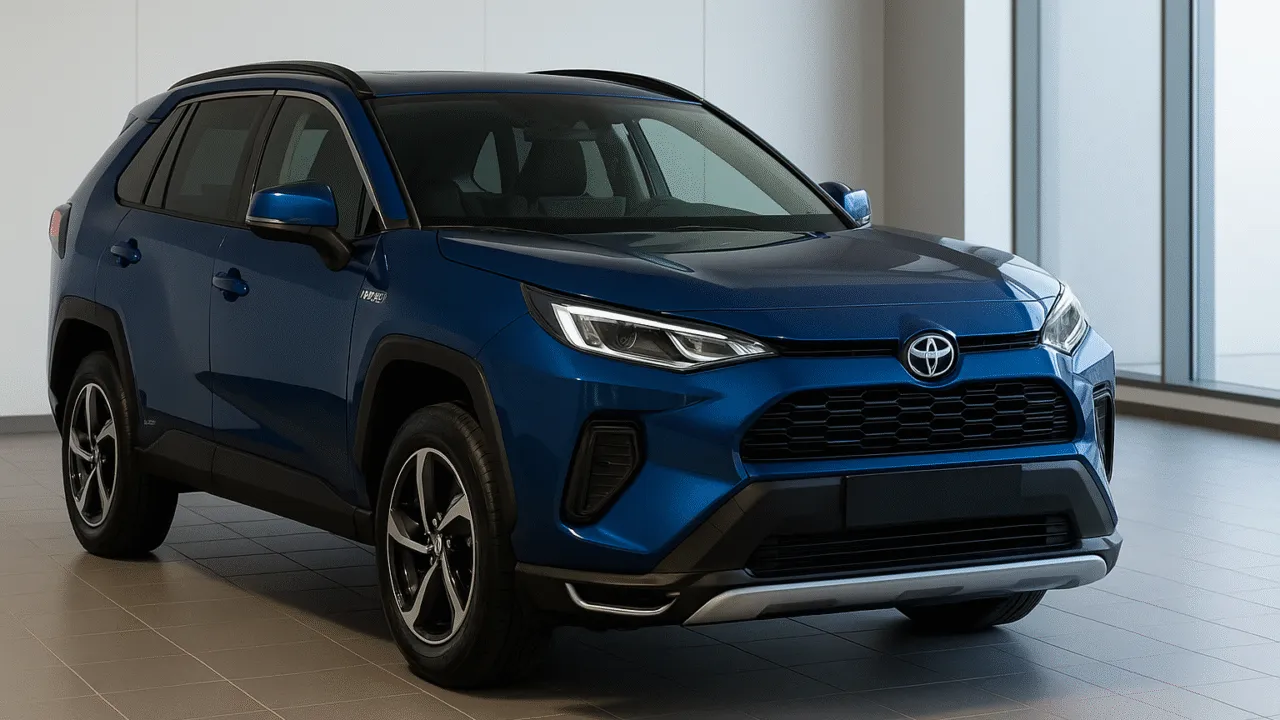
While not a hardcore off-roader, the RAV4 Hybrid’s geometry supports decent all-terrain capability.
| Parameter | Measurement |
|---|---|
| Ground Clearance | 200 mm |
| Approach Angle | 19° |
| Departure Angle | 21° |
| Ramp Breakover | 18° |
| Wading Depth | ~400 mm |
| Turning Radius | 5.5 m |
These numbers allow the RAV4 Hybrid to handle broken roads, deep potholes, or rocky countryside trails without scraping its underbody. The underfloor components are also shielded to protect the battery pack and exhaust layout.
6. Real-World Off-Road Impressions
In light off-road testing (based on international model reviews), the RAV4 Hybrid demonstrates remarkable stability on varied surfaces.
Gravel Roads: The e-AWD system engages smoothly, transferring up to 50% torque to the rear wheels when front grip is lost.
Wet Roads: The hybrid control unit predicts wheel slip early, ensuring the vehicle remains composed under acceleration.
Hill Climbs: The Trail Mode and Hill Start Assist prevent rollback, while regenerative braking assists in controlled descents.
Broken Terrain: Despite being a monocoque SUV, the chassis feels rigid, and the suspension absorbs most shocks with minimal cabin vibrations.
Owners in India can expect similar performance on hilly regions like Himachal, Ladakh routes, or even rural roads with unpredictable surfaces.
7. Ride Comfort & NVH on Rough Roads
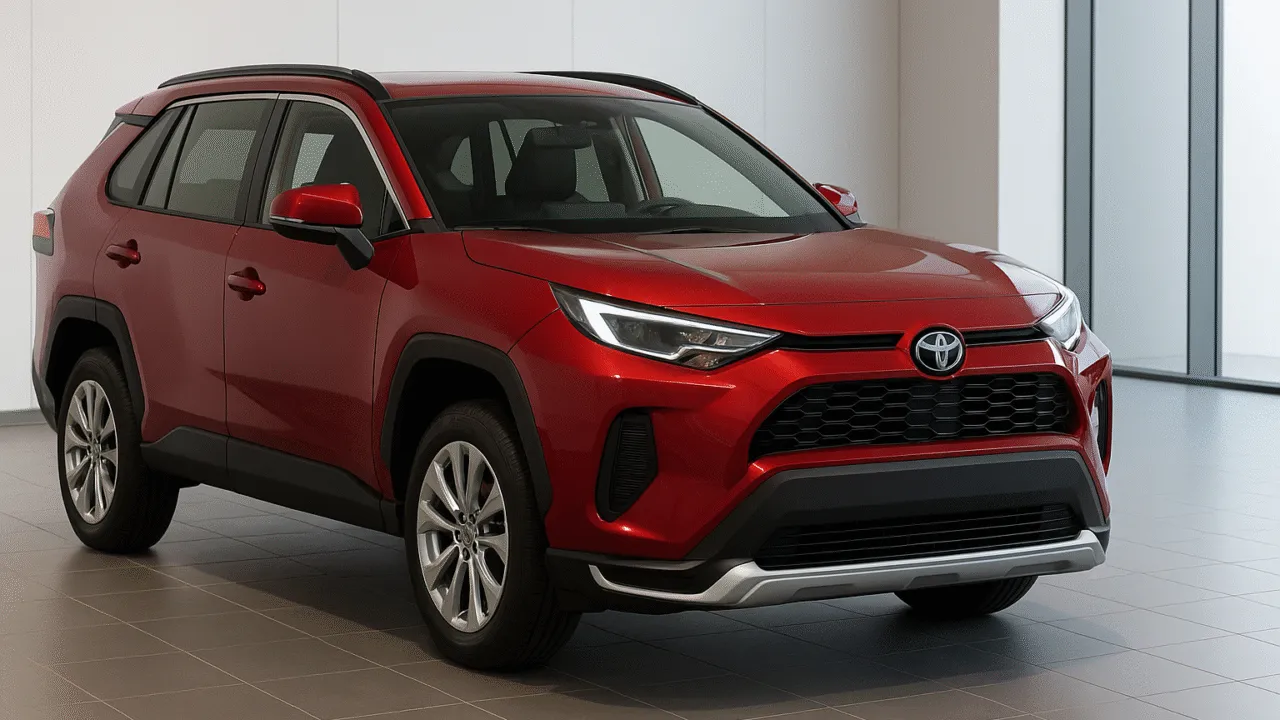
The RAV4 Hybrid prioritizes refinement even on tough terrain. Toyota’s engineers have optimized cabin insulation and drivetrain calibration for near-silent operation, especially during EV-only low-speed runs.
| Parameter | Evaluation |
|---|---|
| Cabin Noise at Idle | 37–39 dB (whisper quiet) |
| Ride Quality at 60 km/h (Rough Patch) | Plush; minimal rebound |
| Vibration Level (Steering) | Negligible |
| Brake Feel (Off-Road) | Progressive and predictable |
| Regenerative Braking Transition | Seamless |
This refinement makes the RAV4 Hybrid an excellent crossover for buyers who want light adventure ability without sacrificing comfort or luxury.
8. Strengths of the RAV4’s Off-Road Package
- Predictive e-AWD: Instantly engages when terrain changes — no manual toggling required.
- Trail Mode Logic: Software-based traction management for moderate off-roading.
- Rigid Platform: TNGA-K architecture provides excellent torsional stiffness.
- 200 mm Clearance: Suitable for rural and hilly roads.
- Battery Positioning: Low and central, improving weight distribution for balance.
- Brake-Based Traction: Helps recover grip when one wheel is airborne or spinning.
This makes it ideal for soft off-roading — the kind most SUV owners in India will actually encounter.
9. Comparison — RAV4 Hybrid vs Rivals on Off-Road Parameters
| Model | Drivetrain | Ground Clearance | AWD System Type | Terrain Mode Support |
|---|---|---|---|---|
| Toyota RAV4 Hybrid | e-AWD (Electric) | 200 mm | Electric Torque Vectoring | Trail Mode |
| Hyundai Tucson AWD | Mechanical AWD | 195 mm | HTRAC AWD | Snow/Mud/Sand |
| Honda CR-V Hybrid (AWD) | e-AWD | 198 mm | Electric Rear Drive | Normal/Snow |
| Jeep Compass AWD | Mechanical AWD | 205 mm | Active Drive | Auto/Sand/Mud/Snow |
| Skoda Kodiaq | Mechanical AWD | 192 mm | Haldex AWD | Snow/Off-road |
The RAV4 Hybrid stands out for its efficiency + traction combination, providing AWD capability without the fuel penalty typical of traditional systems.
10. Use Case — The Ideal Buyer Profile
The RAV4 Hybrid 2026 suits those who want a balanced SUV for both urban and adventure use:
- Urban professionals who travel long distances and want hybrid economy.
- Families taking weekend drives to hill stations or resorts.
- Buyers who appreciate capability but don’t need a full ladder-frame 4×4.
- Eco-conscious users seeking hybrid efficiency with go-anywhere versatility.
It’s not meant for rock crawling or deep river crossings — but perfect for gravel roads, mild trails, hilly terrain, or rural routes where grip and ground clearance matter.
11. Verdict — Smart Capability with Hybrid Efficiency
The 2026 Toyota RAV4 Hybrid redefines what an efficient SUV can do off-road.
Instead of brute power, it uses intelligent traction management, hybrid torque delivery, and strong chassis balance to handle unpredictable terrain gracefully.
For Indian buyers, it offers something rare — a premium hybrid SUV that’s equally comfortable navigating daily city commutes and spontaneous weekend escapes.
It may not replace your Fortuner on the Himalayas, but it’s far more than just another soft-roader. The RAV4 Hybrid is proof that adventure and efficiency can coexist.
FAQs — Toyota RAV4 Hybrid 2026 Off-Road Capability
1. Does the Toyota RAV4 Hybrid 2026 have real AWD?
Yes, it uses an electronic AWD system (e-AWD) powered by a rear electric motor that engages when additional traction is needed.
2. Can the RAV4 Hybrid handle off-road terrain?
It’s designed for light off-roading — gravel, sand, and uneven terrain — not extreme rock trails.
3. What is the ground clearance of the RAV4 Hybrid?
Around 200 mm, suitable for most Indian road conditions.
4. Does it have a locking differential?
It doesn’t have a mechanical diff-lock but simulates torque distribution through the Trail Mode and traction control.
5. How effective is the e-AWD system compared to traditional AWDs?
It’s more efficient and quicker to respond electronically, though not as rugged for extreme off-road use.