

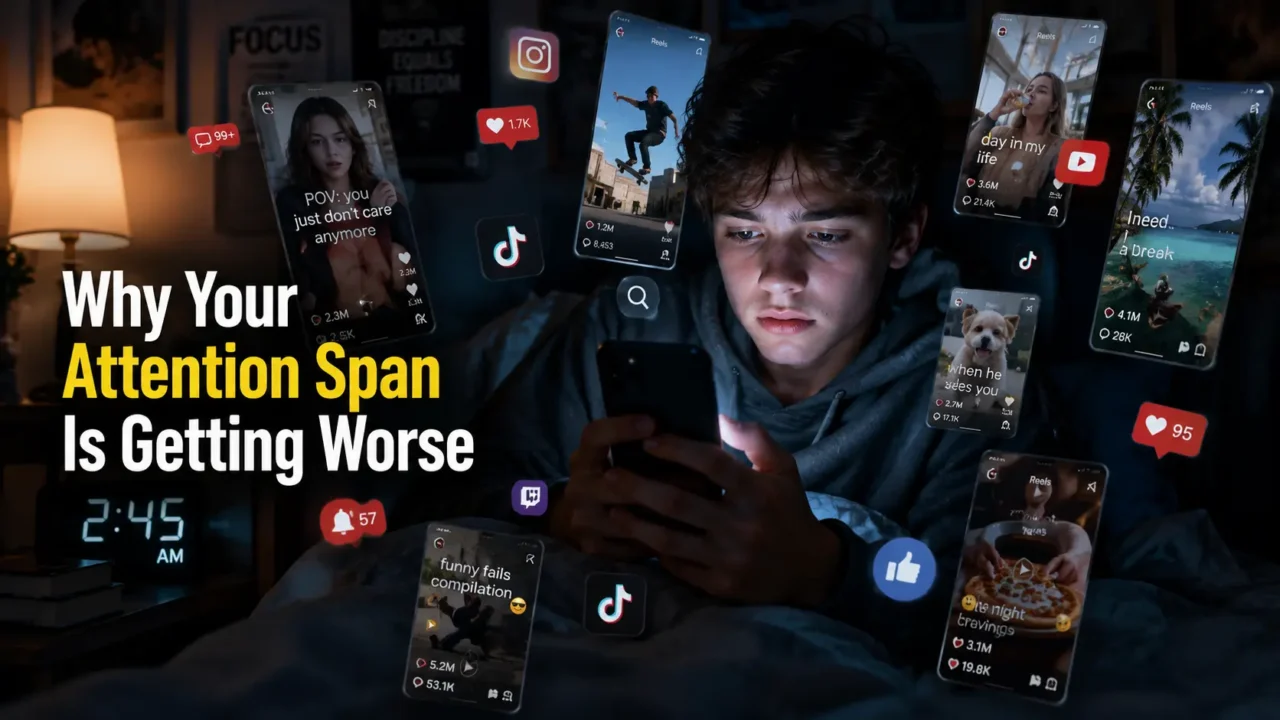
You open Instagram for a few minutes, scroll through a couple of reels, reply to one message, and suddenly an hour disappears.
Later, when you try to study, work, watch a long video, or even read a few pages of a book, your brain feels restless. You keep checking notifications, switching apps, or searching for something more entertaining.
This experience has become extremely common in the digital age.
Modern social media platforms are changing how people consume information, process entertainment, and maintain focus. With endless scrolling, short-form content, instant dopamine rewards, and constant notifications, many people are noticing a decline in their attention span without fully understanding why.
The truth is that your brain is adapting to the environment you expose it to daily.
And today’s online environment is built for constant stimulation.
What Is Attention Span?
Attention span refers to the amount of time your brain can stay focused on a task before becoming distracted.
In the past, people were more used to slower forms of entertainment and learning.
Older Content Consumption Habits
Most people spent time on:
• Books
• Long television shows
• Newspapers
• Full-length YouTube videos
• Offline hobbies
These activities required patience and sustained concentration.
Today, digital consumption has changed dramatically.
Modern Digital Consumption
Most users now consume:
• 15-second reels
• TikTok videos
• Shorts
• Quick memes
• Fast-moving content feeds
This shift trains the brain to expect instant stimulation every few seconds.
As a result, slower activities begin feeling mentally exhausting or “boring,” even when they are important.
How Social Media Is Rewiring Your Brain
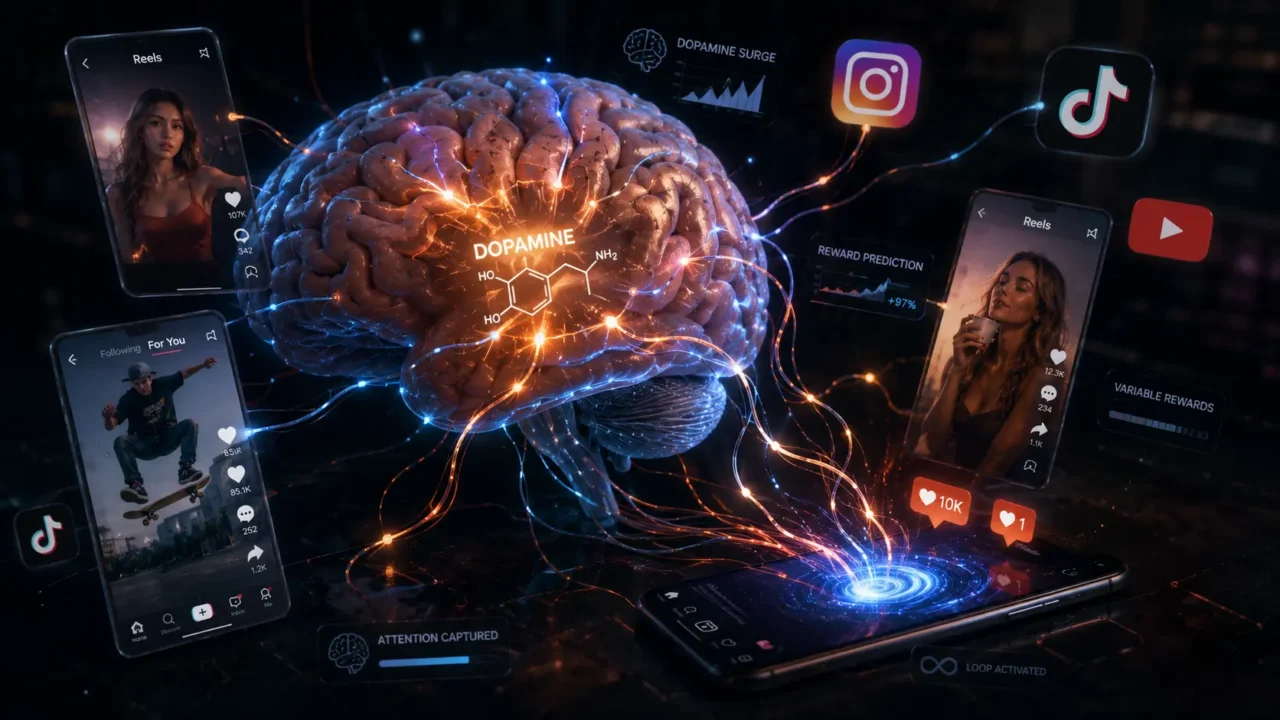
Social media apps are carefully designed to keep users engaged for as long as possible.
Every swipe introduces something new:
• A funny video
• Breaking news
• Viral content
• Emotional reactions
• Entertainment
This constant novelty activates the brain’s reward system.
The Role of Dopamine
Dopamine is a neurotransmitter associated with motivation, reward, and pleasure.
Every time you:
• Receive a notification
• Get likes on a post
• Discover entertaining content
• Watch a viral reel
…your brain receives a small dopamine reward.
Over time, your brain starts craving quick and repeated stimulation.
This creates a cycle where longer and slower tasks begin feeling less rewarding compared to endless scrolling.
Why Short-Form Content Feels So Addictive
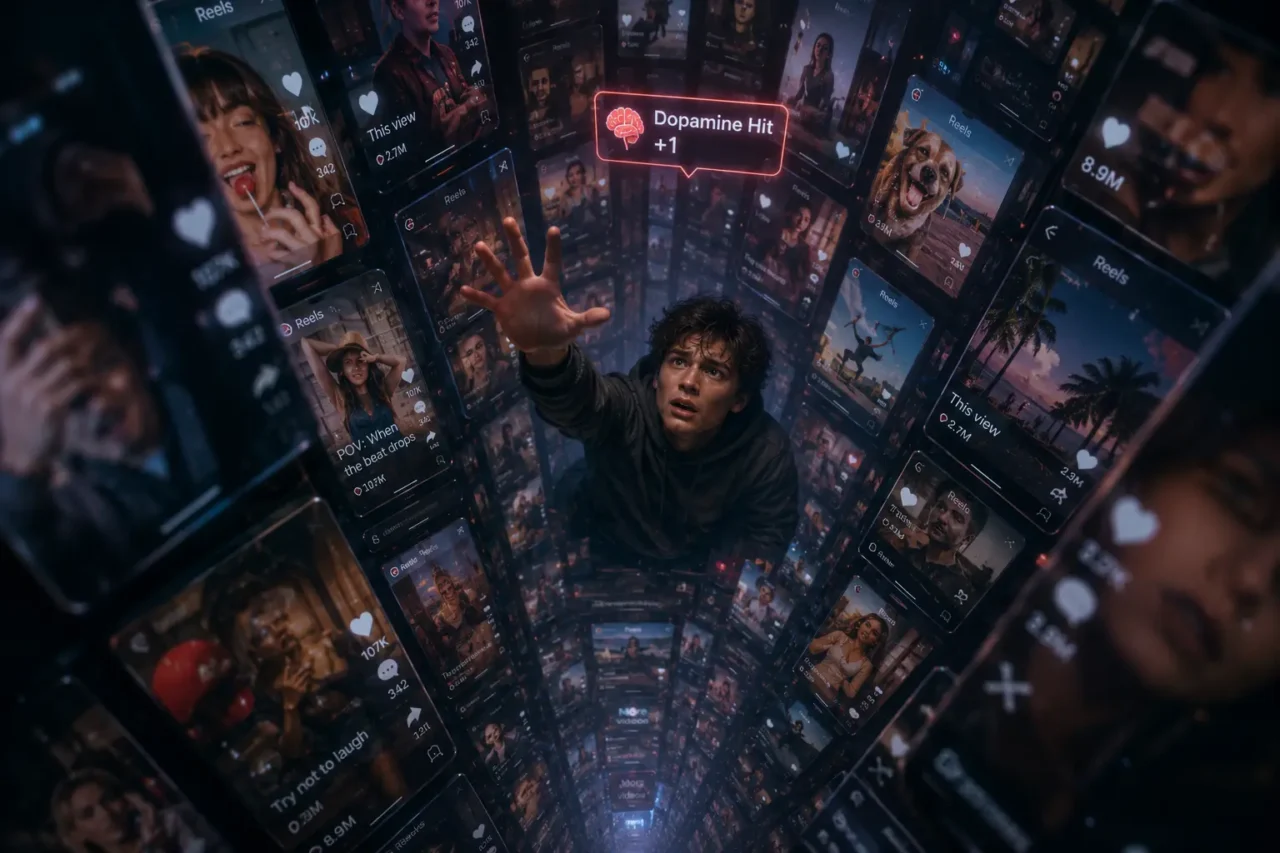
Short-form platforms like Instagram Reels, TikTok, and YouTube Shorts are optimized for attention retention.
They remove friction completely.
Infinite Scroll
There is no natural stopping point.
Unlike books or movies, social media feeds never truly end.
Your brain keeps expecting the “next interesting thing.”
Personalized Algorithms
Algorithms learn your behavior extremely quickly.
They study:
• Watch time
• Likes
• Shares
• Comments
• Search history
This allows platforms to show content specifically designed to hold your attention longer.
Instant Gratification
Short-form content provides fast entertainment without requiring mental effort.
Instead of waiting for rewards, users receive constant stimulation instantly.
This gradually lowers patience for activities that require deeper focus.
Signs Your Attention Span May Be Declining
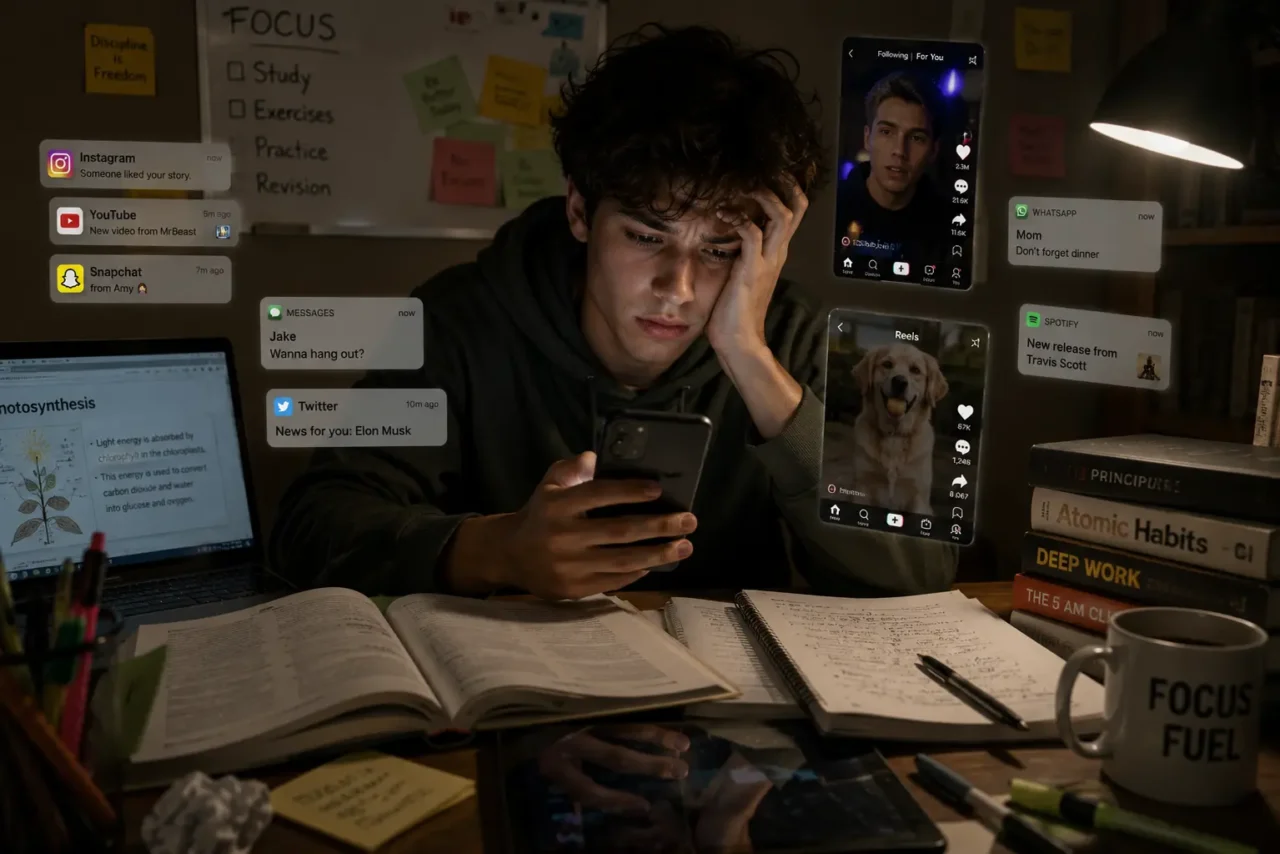
Many people experience the effects of digital overstimulation without realizing it.
Here are some common signs.
Constantly Checking Your Phone
You unlock your phone repeatedly even without notifications.
Skipping Videos Quickly
If content doesn’t become interesting immediately, you lose patience within seconds.
Difficulty Reading Long Content
Books, long articles, and study materials suddenly feel mentally tiring.
Multitasking Excessively
Watching videos while texting, scrolling, or doing multiple activities simultaneously becomes normal.
Feeling Bored Very Easily
Moments of silence or slower environments start feeling uncomfortable.
Struggling With Deep Work
Focusing on one task for extended periods becomes difficult.
This is one of the biggest side effects of modern digital overstimulation.
The Psychological Design Behind Social Media Apps
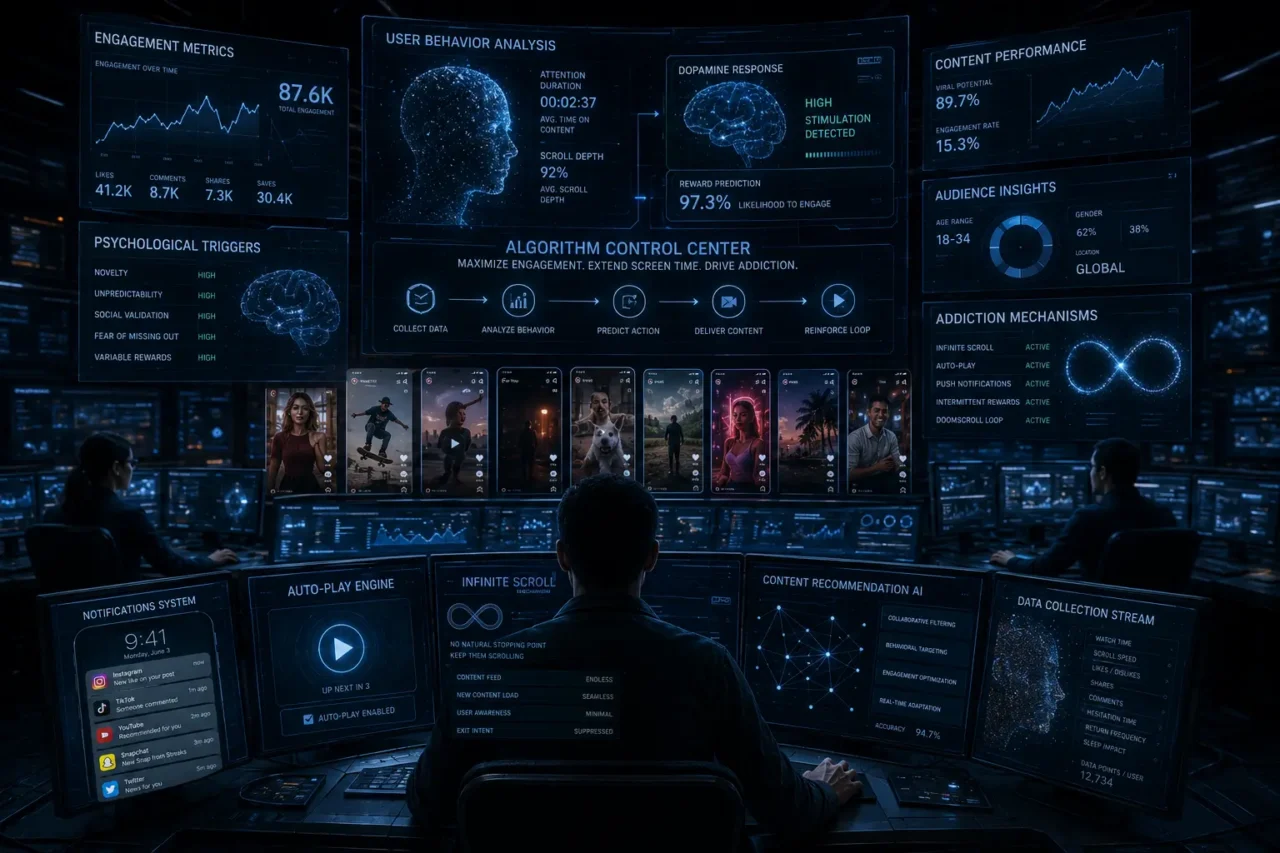
Social media companies compete for human attention because attention generates advertising revenue.
The longer users stay on the platform, the more profitable the app becomes.
That is why many platforms use psychological engagement techniques.
Autoplay Features
Videos continue automatically before users decide what to watch next.
Notification Systems
Notifications are designed to constantly pull users back into the app.
Variable Rewards
Sometimes a post performs well. Sometimes it doesn’t.
This unpredictability keeps creators and users checking platforms repeatedly.
It works similarly to reward systems used in gaming and gambling psychology.
Is Social Media Completely Bad?
Not necessarily.
Social media also offers many benefits.
Positive Effects of Social Media
Platforms can provide:
• Educational content
• Career opportunities
• Creative expression
• Online communities
• Business growth
• Networking opportunities
The issue usually comes from excessive and uncontrolled consumption.
Technology becomes harmful when it starts controlling your habits instead of supporting your goals.
How to Improve Your Attention Span Again

The brain is adaptable, which means attention span can improve with healthier digital habits.
Reduce Endless Scrolling
Setting limits on short-form content consumption can reduce overstimulation.
Practice Single-Tasking
Focus on one activity at a time instead of constantly multitasking.
Read More Long-Form Content
Books and detailed articles help retrain deep focus.
Turn Off Unnecessary Notifications
Reducing interruptions improves concentration significantly.
Spend More Time Offline
Walks, exercise, journaling, and quiet environments help calm mental overstimulation.
Avoid Using Your Phone Immediately After Waking Up
Starting the day without instant digital stimulation can improve mental clarity and focus.
Final Thoughts
Your declining attention span is not simply a result of laziness or lack of discipline.
Modern social media platforms are intentionally designed to capture and hold human attention for as long as possible.
From infinite scrolling to dopamine-driven algorithms, digital platforms continuously train the brain to seek quick stimulation and instant rewards.
Understanding how these systems affect your focus is the first step toward building healthier online habits.
Technology itself is not the enemy.
The real challenge is learning how to use social media consciously without allowing it to completely control your attention, time, and mental energy.